DEFINITION OF THE PRESENT PERFECT TENSE
The present perfect is used to indicate a link between the present and the past. The time of the action is before now but not specified, and we are often more interested in the result than in the action itself.
THE PRESENT PERFECT IS USED TO
DESCRIBE
- An action or situation that started in the past and continues in the present. I have lived in Bristol since 1984 (= and I still do.)
- An action performed during a period that has not yet finished. She has been to the cinema twice this week (= and the week isn't over yet.)
- A repeated action in an unspecified period between the past and now. We have visited Portugal several times.
- An action that was completed in the very recent past, expressed by 'just'. I have just finished my work.
- An action when the time is not important. He has read 'War and Peace'. (= the result of his reading is important)
Note: When we want to give or ask details about when, where, who, we use the simple past. Read more about choosing between the present perfect and the simple past tenses.
FORMING THE PRESENT PERFECT
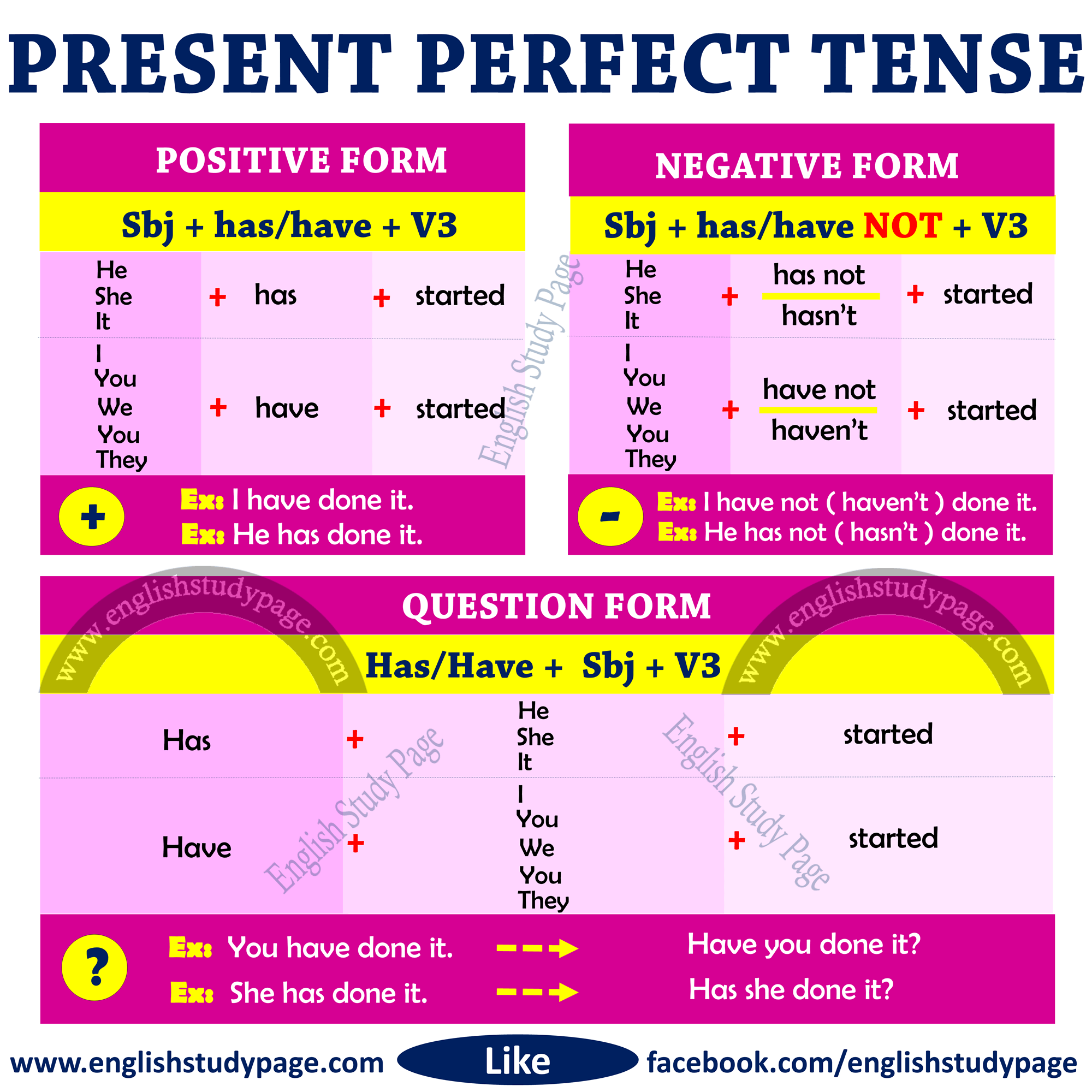
The present perfect of any verb is composed of two elements: the appropriate form of the auxiliary verb to have (present tense), plus the past participle of the main verb. The past participle of a regular verb is base+ed, e.g. played, arrived, looked. For irregular verbs, see the Table of irregular verbs in the section called 'Verbs'.
| Affirmative | ||
Subject | to have | past participle |
| She | has | visited. |
| Negative | ||
Subject | to have + not | past participle |
| She | has not (hasn't) | visited. |
| Interrogative | ||
to have | subject | past participle |
| Has | she | visited? |
| Negative interrogative | ||
to have + not | subject | past participle |
| Hasn't | she | visited? |
SOME EXERCIES:
- https://www.englisch-hilfen.de/en/exercises/tenses/present_perfect_statements.htm
- https://www.perfect-english-grammar.com/present-perfect-exercises.html
- https://www.ego4u.com/en/cram-up/grammar/present-perfect-simple/exercises
- https://www.ecenglish.com/learnenglish/lessons/present-perfect-quiz
Bibliographical sources:
Comentarios
Publicar un comentario